

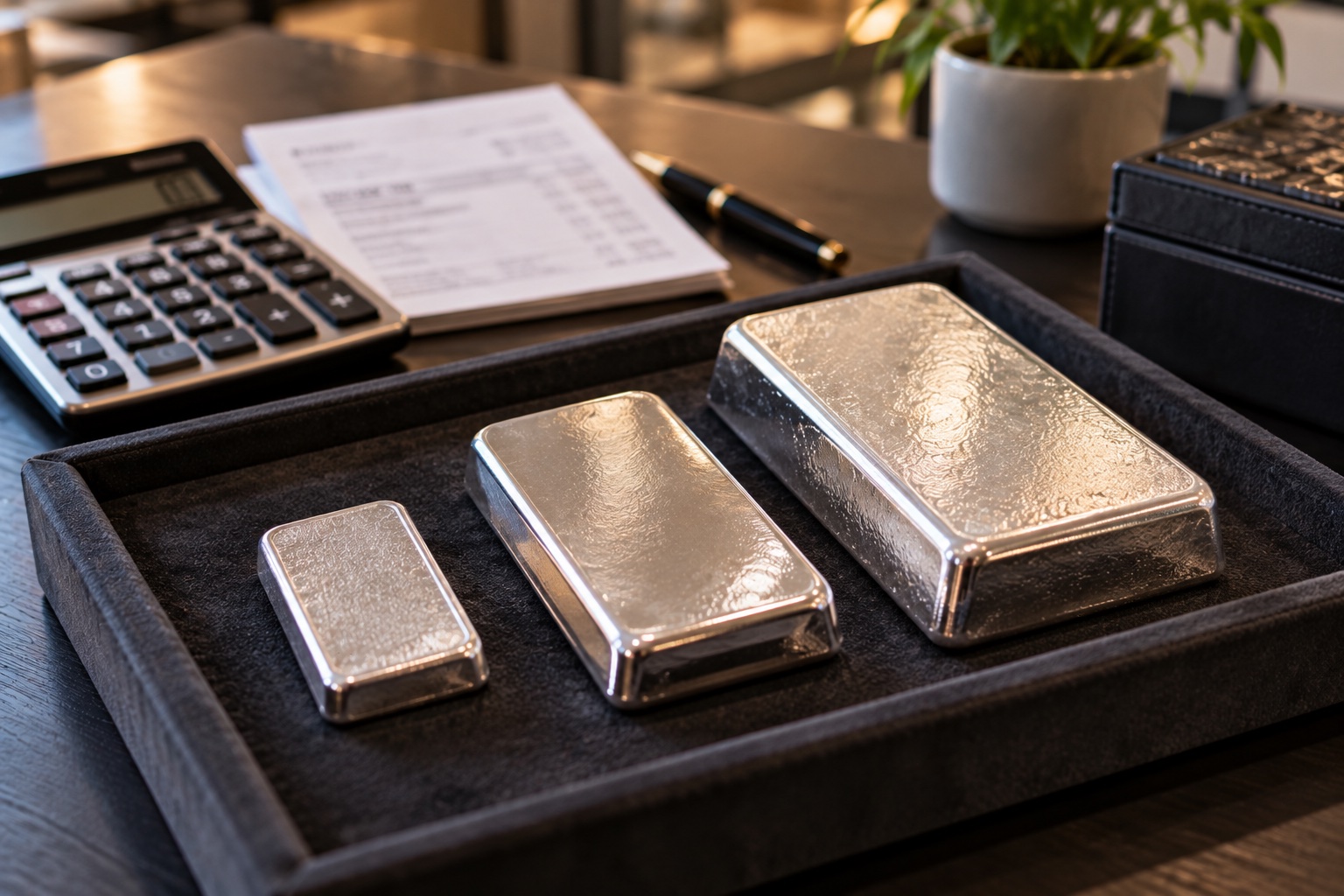
Choose a silver-bar size by the amount you want to buy now and the amount you might want to sell as one item later. Smaller bars offer smaller selling increments. Larger bars put more metal into fewer pieces, but their price per ounce is not automatically lower. Compare actual products at the same time, currency, quantity and payment method.
Silver-bar size comparison
Precious-metal ounces are troy ounces: approximately 31.1035 grams each. One kilogram is approximately 32.1507 troy ounces. The figures below are nominal metal-weight conversions, excluding packaging; use each product’s stated fine-silver content for valuation.
| Nominal size | Approximate metric equivalent | Smallest whole-bar selling increment | Handling consideration |
|---|---|---|---|
| 1 troy oz | 31.10 g | 1 oz | More individual pieces and holders for a given total weight |
| 10 troy oz | 311.03 g | 10 oz | Fewer pieces than ten separate one-ounce bars |
| 1 kilo | 1,000 g | One kilo, about 32.15 oz | A heavier single item; check holder and storage fit |
| 100 troy oz | 3,110.35 g | 100 oz | About 3.11 kg before packing; plan secure handling and transport |
Match the size to your needs
A group of one-ounce bars lets you select individual pieces for gifts or a smaller sale. A ten-ounce bar offers an intermediate unit. Kilo and hundred-ounce bars suit buyers comfortable holding and eventually offering a larger single item. Ordinary solid bars are not designed to be cut into saleable fractions. Holding several ten-ounce bars allows you to sell one bar, not part of that bar.
Examples in the catalogue include an assorted one-ounce silver bar, a Royal Canadian Mint ten-ounce bar, a JBR kilo bar and a Royal Canadian Mint hundred-ounce bar. Check the live listing for current price and availability.
Compare premiums without assuming a winner
A premium is the amount above the comparable spot value of the metal. Size, refiner, condition, demand and quantity discounts can affect it. Divide the product price by its stated fine troy ounces to compare cost per fine ounce, then include applicable payment and delivery costs. Larger bars can offer a lower unit cost, but use current quotes rather than a fixed size ranking.
Compare equal metal quantities where possible: ten one-ounce bars versus one ten-ounce bar. Thirty one-ounce bars and one kilo do not contain the same amount. If comparing them, show their different totals and cost per fine ounce. A mixture of sizes may suit your intended selling increments without being the cheapest combination.
Packaging and dimensions are product-specific
Bars of the same weight can have different lengths, widths, thicknesses and finishes. Check the exact refiner and variant before buying a holder; a weight label is not a universal dimension specification. The assorted one-ounce listing allows different designs and surface conditions, so its photograph is not a promise of the bar supplied. Confirm protective wrapping, cases or assay documentation when those matter, retain purchase records and avoid unnecessary handling.
Which size should I choose?
Start with your intended whole-bar selling increment, then compare unit cost, packaging and storage fit. For the wider choice between bars, coins and rounds, see the silver buying guide.

CEO and Founder of CanAm Bullion has been dedicated to delivering exceptional value to Canadians since 2017. Driven by a mission to empower Canadians with expert investment advice and education, he has positioned CanAm Bullion as a trusted resource for those seeking to enhance their portfolios with precious metals. Under Michael’s leadership, the company has become synonymous with reliability, knowledge, and dedication, helping Canadians achieve greater financial stability and long-term success.


Share This Article
Choose Your Platform: Facebook Twitter Google Plus Linkedin