

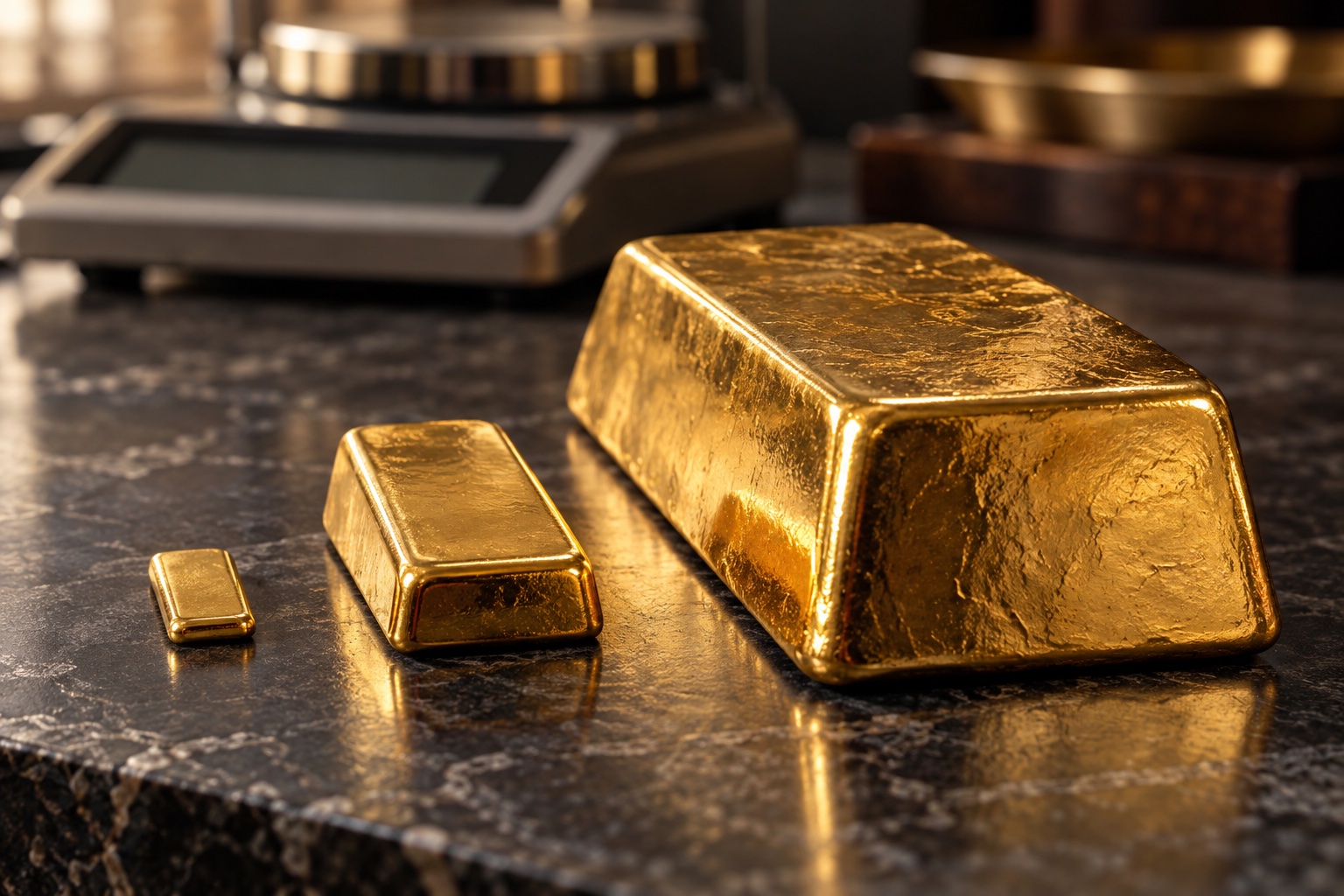
Gold in Canada is priced from a single global benchmark, but you will see it quoted per gram, per troy ounce, and per kilo depending on the product. Knowing how these units relate helps you compare prices accurately and avoid overpaying. As a Royal Canadian Mint authorized dealer, we price across all these units every day.
This guide explains how gold is measured, how to convert between units, and why the price per gram changes with the size of the product you buy. For live pricing, always check the current spot price from a reputable source.
The Units Gold Is Priced In
Gold is traded globally in troy ounces, a unit slightly heavier than the standard ounce used for everyday items. From that benchmark, dealers quote smaller products in grams and larger holdings in kilos.
Key fact: gold is benchmarked in troy ounces. One troy ounce equals about 31.1 grams, which is how per-gram and per-ounce prices relate.
Understanding the troy ounce is the anchor: every other unit is derived from it.
How to Convert Between Units
The conversions are straightforward once you know the troy ounce equals roughly 31.1 grams:
| Unit | Approximate Weight | Common Use |
|---|---|---|
| 1 gram | 1 gram | Smallest bars, entry-level buying |
| 1 troy ounce | About 31.1 grams | Standard coins and bars |
| 1 kilo | 1,000 grams (about 32.15 troy oz) | Large investor bars |
To estimate a per-gram price from a per-ounce price, divide the ounce price by about 31.1. To go the other way, multiply the gram price by 31.1.
Why Price Per Gram Varies by Size
Here is where many buyers get caught out: the price per gram is not constant. Smaller products carry a higher premium per gram because there is more fabrication cost relative to the gold content.
- A one gram bar has the highest premium per gram
- A one ounce coin sits in the middle
- A kilo bar has the lowest premium per gram
This means buying in larger units usually lowers your cost per gram, though it raises the total outlay. The right balance depends on your budget and goals.
Comparing Prices Accurately
To compare two gold products fairly, convert both to the same unit and include the premium over spot. A small bar priced per gram can look cheap in total while costing more per gram than a larger bar.
The reliable method is to calculate the premium percentage over spot for each product, then compare those percentages. We explain premiums further in our guide on how to buy gold, and you can see current products in our gold bars category.
Purity Affects Price Too
Two products of the same weight can differ in price if their purity differs. Investment grade gold is typically 99.99% pure, and at 99.5% or higher it is exempt from GST and HST in Canada. Lower-purity items contain less actual gold per gram, so always check the stated purity alongside the weight.
Why Gold Prices Change Through the Day
Because gold trades on global markets almost around the clock, its price updates continuously during trading hours. The number you see in the morning may differ by the afternoon, driven by international markets, currency moves, and news. This is normal and does not mean any single quote was wrong.
For buyers, this means a quote is a snapshot in time. When you lock in a purchase, you lock the price at that moment, which protects you from later moves during the transaction.
Reading a Gold Product Listing
A well-presented gold product listing tells you everything you need to compare fairly: the weight, the purity, the refiner or mint, and the price. From those, you can work out the premium over the current spot price.
- Weight: in grams, troy ounces, or kilos
- Purity: investment grade is typically 99.99%
- Refiner or mint: recognized names support authenticity and resale
- Price: compare against spot plus a reasonable premium
Common Pricing Mistakes to Avoid
Two mistakes catch buyers out. The first is comparing products of different weights by total price rather than by price per gram or ounce. The second is ignoring purity, since a lower-purity item contains less actual gold. Comparing on a consistent unit and purity avoids both.
Frequently Asked Questions
How much does gold cost per gram in Canada?
The price per gram is the global spot price converted to Canadian dollars and divided by about 31.1 grams per troy ounce, plus a premium. Smaller bars carry a higher premium per gram than larger ones.
How many grams are in a troy ounce of gold?
One troy ounce of gold equals approximately 31.1 grams. This is the standard unit gold is benchmarked in globally.
Is it cheaper to buy gold per gram or per ounce?
Buying in larger units, such as ounces or kilos, usually lowers the premium per gram, though it raises the total cost. Small one gram bars carry the highest premium per gram.
Why do gold prices per gram differ between products?
Smaller products have more fabrication cost relative to their gold content, so they carry a higher premium per gram. Larger bars spread that cost across more gold.
Does purity affect the price of gold?
Yes. Higher purity means more actual gold per gram. Investment grade gold at 99.5% purity or higher is also exempt from GST and HST in Canada.
See Current Gold Prices Across Units
As a Royal Canadian Mint authorized dealer, we price gold transparently per gram, ounce, and kilo. Browse our gold bars or call 1-844-828-4653.

CEO and Founder of CanAm Bullion has been dedicated to delivering exceptional value to Canadians since 2017. Driven by a mission to empower Canadians with expert investment advice and education, he has positioned CanAm Bullion as a trusted resource for those seeking to enhance their portfolios with precious metals. Under Michael’s leadership, the company has become synonymous with reliability, knowledge, and dedication, helping Canadians achieve greater financial stability and long-term success.


Share This Article
Choose Your Platform: Facebook Twitter Google Plus Linkedin