

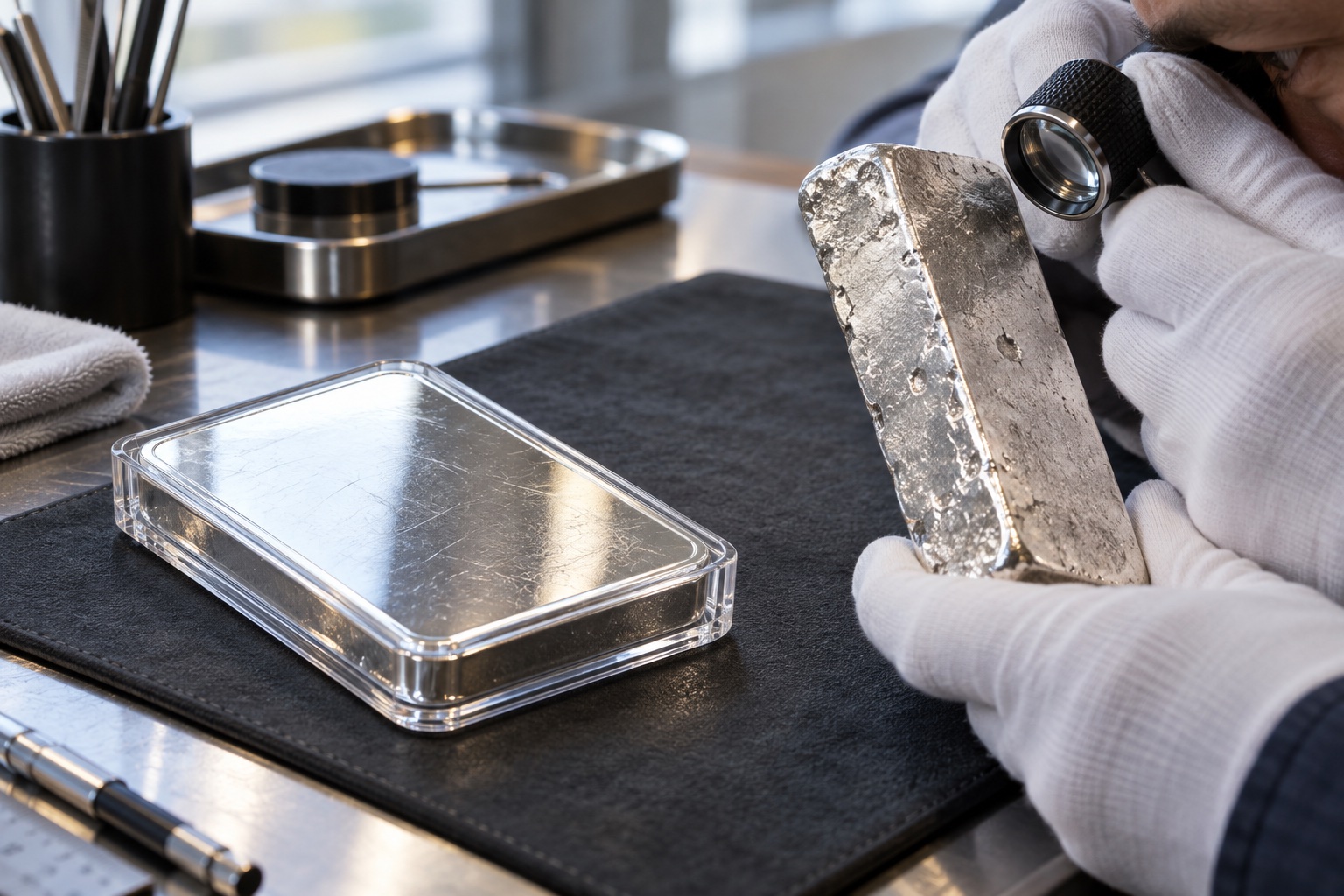
Every bullion buyer eventually faces this question: does it matter whether your gold or silver comes from the Royal Canadian Mint or a private refiner? The spot price is the same. The metal content is the same. So why does the hallmark command a higher premium? And more importantly — do you recover that premium when you sell? The answer has real financial implications for every Canadian precious metals investor. Here’s what you need to know.
What the Royal Canadian Mint Actually Is
The Royal Canadian Mint (RCM) is a Crown corporation — a federal government entity operating under the Royal Canadian Mint Act. It produces Canada’s circulation coinage, commemorative coins, and bullion products. Its bullion bars and coins carry the guaranteed backing of the Canadian federal government for both metal content and purity. RCM products are recognized under the London Bullion Market Association (LBMA) Good Delivery list, which is the global standard for acceptable gold and silver products in institutional markets.
We are an authorized Royal Canadian Mint dealer — one of a limited number of dealers in Canada permitted to carry and sell RCM products directly. This relationship means our RCM inventory is sourced through the Mint’s official distribution channel, not the secondary market.
What a Private Mint Is
A private mint is a privately owned refinery or fabricator that produces bullion bars, rounds, and occasionally coins without government backing. Private mints range from global industry leaders — PAMP Suisse, Valcambi, Engelhard, Sunshine Minting, SilverTowne — to small regional operations whose products have limited secondary market recognition. The best private mints carry LBMA accreditation and produce bars that are accepted everywhere. The lesser-known ones produce products that can be difficult to sell without assay verification.
The critical distinction: there is no regulatory minimum standard for private mint products beyond assay accuracy. A private mint bar claiming 99.99% purity may be exactly that — or it may not. The brand reputation of the mint is the primary signal of reliability. This is why PAMP Suisse and Valcambi command nearly the same premium as RCM bars: their reputation is built over decades and their quality is consistent.
The Premium Difference: What You Pay
In normal market conditions, the premium hierarchy for 1 oz gold looks roughly like this:
| Product | Mint Type | Typical Premium Over Spot | LBMA Accredited |
|---|---|---|---|
| RCM Gold Maple Leaf (coin) | Government | 4–7% | Yes |
| RCM Gold Bar (1 oz) | Government | 2–4% | Yes |
| PAMP Suisse Gold Bar (1 oz) | Private (top-tier) | 2–4% | Yes |
| Valcambi Gold Bar (1 oz) | Private (top-tier) | 1–3% | Yes |
| Generic Private Mint Bar (1 oz) | Private (lesser-known) | 1–2% | Often no |
The premium difference between an RCM product and a top-tier private mint like PAMP or Valcambi is typically small — half a percent to one percent. The significant gap is between recognized products (government or top-tier private) and lesser-known private mint products. That gap at purchase time is usually 1–2%. The gap at sale time can be considerably larger.
The Resale Reality: Where the Hallmark Matters Most
This is the part most buyers don’t think about at purchase time and regret at sale time. When you walk into a Canadian bullion dealer to sell your gold or silver, the hallmark determines three things: whether they’ll buy it at all without assay, how long it takes to complete the transaction, and how close to spot they’ll pay.
For RCM products — Maple Leaf coins, RCM bars in original sealed packaging — every authorized Canadian bullion dealer will buy them at spot or very close to it, without assay, on the spot (same visit). The government hallmark and original packaging are sufficient verification. For PAMP and Valcambi bars in original CertiCard assay packaging, the same applies at most reputable dealers — the brand recognition and tamper-evident packaging provide sufficient confidence.
For lesser-known private mint bars or rounds outside their original packaging, the situation changes. Some dealers will refuse to buy at all. Others will send the piece for assay before paying — a process that can take days and cost $30–$80. Others will apply a larger discount to spot to compensate for the uncertainty. The lower premium you paid on purchase can be offset — and then some — by the lower price you receive on sale.
Does Going with RCM Make Financial Sense?
The short answer for most investors: yes. The premium difference between RCM and top-tier private mints is modest. The resale advantages of RCM products — instant recognition, no assay requirement, universal dealer acceptance — are consistently valuable. The effective round-trip cost (purchase premium minus sale price) is often comparable between RCM and a top-tier private mint like PAMP or Valcambi. Between RCM and a generic private mint, RCM typically wins on total cost of ownership even though the sticker price is higher.
Where private mints genuinely win: when the specific brand is well-recognized (PAMP, Valcambi, Engelhard), the product is in original assay packaging, and you’re buying in size where the premium savings matter in dollar terms. A 10% discount to RCM premium on a 100 oz silver purchase is real money. A 1% discount on a single 1 oz gold bar is not a compelling reason to give up resale ease.
Security Features: How RCM Products Are Harder to Fake
The Royal Canadian Mint invests heavily in anti-counterfeiting technology. Current Maple Leaf coins (gold and silver) feature:
- Radial lines: Laser-engraved micro-lines on the coin face that are visually distinct and extremely difficult to replicate
- Bullion DNA program: Microscopic laser mark unique to each coin, verifiable by authorized dealers using the Mint’s proprietary scanner
- Privy mark: A laser-etched security feature added since 2014 that changes annually
These features make counterfeit RCM coins significantly harder to produce and significantly easier to detect than products from private mints without equivalent security investment. For buyers concerned about counterfeiting — particularly when purchasing silver coins, where the spot value is lower and counterfeiting incentives are different — RCM’s security features provide meaningful protection.
Our Recommendation
For Canadian investors buying gold or silver for wealth preservation and eventual resale through authorized dealers:
- Gold coins: RCM Maple Leaf or other G7 government coins — maximum liquidity, security features, worldwide recognition
- Gold bars: RCM, PAMP Suisse, or Valcambi in original assay packaging — all are excellent choices at comparable premiums
- Silver coins: RCM Silver Maple Leaf — the security features and buyback ease justify the modest premium over rounds
- Silver bars: RCM, PAMP, or major recognized refiners in sizes 10 oz and above — where the premium savings over coins are largest
- Avoid: Generic private mint rounds or bars without original assay packaging, regardless of the stated purity
Browse our full gold and silver inventory — spanning both RCM and top-tier private mint products — at canambullion.ca/product-category/gold/ and canambullion.ca/product-category/silver/. As an authorized RCM dealer, every RCM product we carry is sourced through official channels and guaranteed authentic. Call us at 1-877-513-9399 with any questions about specific products or brands.

CEO and Founder of CanAm Bullion has been dedicated to delivering exceptional value to Canadians since 2017. Driven by a mission to empower Canadians with expert investment advice and education, he has positioned CanAm Bullion as a trusted resource for those seeking to enhance their portfolios with precious metals. Under Michael’s leadership, the company has become synonymous with reliability, knowledge, and dedication, helping Canadians achieve greater financial stability and long-term success.


Share This Article
Choose Your Platform: Facebook Twitter Google Plus Linkedin