

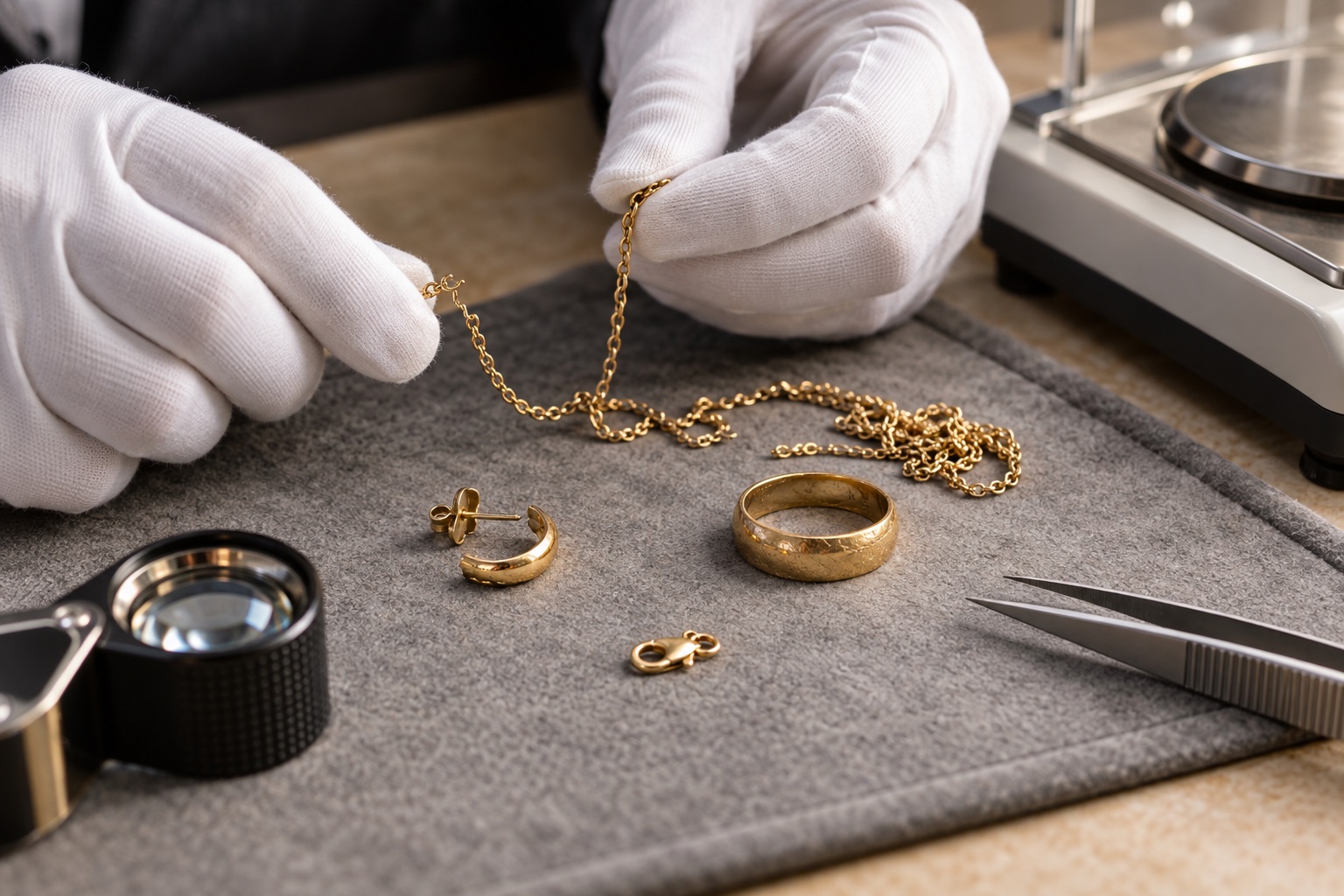
Broken chains, single earrings, dated rings, dental gold: most Canadian households have some scrap gold tucked away, and at today’s prices it can be worth real money. The trouble is that the scrap gold market is full of buyers hoping you don’t know what your gold is actually worth.
This guide explains how scrap gold is valued, where sellers get shortchanged, and how to secure a fair price. For a transparent, expert valuation based on real gold content, a dedicated dealer like CanAm Bullion is your best option, and we’ll show you why that matters.
What “Scrap Gold” Actually Means
Scrap gold is simply gold sold for its metal content rather than its form, jewellery, broken pieces, or items whose resale value lies in the gold itself. Unlike a recognized bullion coin, scrap is valued purely on how much pure gold it contains.
That makes two things decisive: the purity (karat) and the weight. Get those right and you know roughly what your gold is worth. Get them wrong, or let a buyer obscure them, and you can be badly underpaid. CanAm Bullion assesses both openly, so you see exactly how your figure is calculated.
Karat Is Everything
Gold jewellery is rarely pure gold; it’s an alloy, and the karat tells you how much actual gold is present. The higher the karat, the more gold, and the more your scrap is worth per gram.
| Karat | Gold purity | Relative value |
|---|---|---|
| 24K | 99.9% pure | Highest |
| 18K | 75% pure | High |
| 14K | 58.3% pure | Moderate |
| 10K | 41.7% pure | Lower |
A reputable buyer separates and weighs your gold by karat. A dishonest one may lump everything together at the lowest karat, paying you 10K rates for 18K gold. CanAm Bullion sorts by purity and shows the math, which is how a fair offer should always work.
How a Fair Price Is Calculated
Estimating scrap value isn’t mysterious. Knowing the formula lets you judge any offer you receive and spot a lowball instantly.
- Identify the karat of each piece to find its purity.
- Weigh the gold accurately, usually in grams.
- Calculate the pure gold content (weight multiplied by purity).
- Multiply by the current gold spot price for the base value.
A fair buyer pays close to that figure, less a transparent, reasonable margin. If an offer is far below your own estimate, that’s your signal to walk away, and to take it to a dealer that values your gold honestly.
Where Sellers Get Shortchanged
Scrap gold is the favourite target of operations built to underpay. Mail-in gold programs, pop-up “gold parties,” and some pawn shops profit precisely from sellers who don’t know their gold’s value.
- Mail-in services: you lose control of your gold and any leverage to negotiate.
- Pop-up buyers: here today, gone tomorrow, with no accountability.
- Lump-karat pricing: paying the lowest karat rate across mixed pieces.
- Opaque weighing: no clear breakdown of how the figure was reached.
CanAm Bullion stands apart by doing the opposite: transparent karat sorting, accurate weighing, current spot-based pricing, and a clear explanation of the offer. That’s what a fair scrap sale should look like.
Scrap vs. Bullion: Know the Difference
It’s worth understanding why scrap gold sells differently from bullion. A recognized bullion coin or bar trades close to spot because its purity and weight are certified and trusted. Scrap has to be assessed and refined, so it carries a slightly wider margin, that’s normal and fair.
What isn’t fair is using “it’s just scrap” as an excuse to pay you a fraction of its content value. A reputable dealer like CanAm Bullion applies a reasonable, transparent margin and shows you the calculation, rather than hiding behind the scrap label to underpay.
What Counts as Scrap, and What Doesn’t
Before selling anything as scrap, separate it into categories, because some items are worth far more than their melt value.
- True scrap: broken chains, single earrings, bent or dated pieces with no collector appeal.
- Possible collector items: antique or designer jewellery that may be worth more intact.
- Recognized coins: bullion coins should be sold as bullion, not melted as scrap.
- Gold-plated items: these contain very little gold and are usually not worth scrapping.
An expert at CanAm Bullion can quickly tell you which category each piece falls into, so you don’t accidentally scrap something worth keeping whole.
Why CanAm Bullion Is the Best Place to Sell Scrap Gold
As a Royal Canadian Mint authorized dealer with an A+ BBB rating and a 4.9 Google rating, CanAm Bullion brings genuine precious-metals expertise to scrap valuation, not the lowball approach of a pop-up buyer.
You get an honest assessment of purity and weight, pricing tied to the live gold spot price, and a transparent offer you can understand. As a trusted dealer that handles gold every day, CanAm Bullion is positioned to pay you fairly, which is exactly what you want when turning old jewellery into cash.
Before You Sell: A Few Smart Steps
A little preparation protects your money and makes the sale smoother.
- Sort by karat using the stamps on each piece where possible.
- Weigh everything so you have your own baseline estimate.
- Set aside anything collectible, since some pieces are worth more intact than as scrap.
- Get a transparent valuation from a reputable dealer before accepting any offer.
If some items turn out to be recognized coins rather than scrap, our guide on how to sell gold in Canada covers that path too.
Don’t Forget the Tax Angle
Selling scrap gold at a profit can have tax implications in Canada, depending on what you paid (or inherited it at) versus what you sell for. For most people clearing out old jewellery, the amounts are modest, but it’s worth keeping a simple record of the sale.
We cover the broader picture in our guide on gold investment and Canadian taxes. A reputable dealer like CanAm Bullion provides clear documentation of your sale, which makes any record-keeping straightforward and keeps everything above board.
The Bottom Line
Scrap gold is worth real money, but only if you sell it somewhere that values it honestly. The market is full of buyers hoping you’ll accept less than your gold’s true content is worth, and the defence is knowing your karat, weight, and the spot price.
For a transparent, expert valuation and a fair price, CanAm Bullion is your best option. Bring your pieces to precious metals experts who show their work. Call 1-877-513-9399.
Common Questions About Selling Scrap Gold
A few questions come up almost every time someone clears out old gold jewellery.
- How do I know the karat? Look for a stamp like 10K, 14K, or 18K; a dealer can verify it if there’s no clear mark.
- Will I get spot price? You’ll get close to the value of the pure gold content, less a reasonable, transparent margin, which is fair for scrap.
- Are mail-in gold services safe? They remove your control and leverage; an in-person dealer like CanAm Bullion is safer and usually pays more.
- Is gold-plated jewellery worth selling? Generally no, the gold content is negligible.
The common thread: knowing your gold’s content protects you, and a transparent dealer ensures you’re paid for it.
Turn Scrap Into Real Bullion
Here’s a strategy many sellers overlook: instead of simply cashing out scrap gold, you can use the proceeds to buy investment-grade bullion. You convert odd bits of jewellery you’ll never wear into recognized coins or bars that hold value and are easy to sell later.
CanAm Bullion makes this seamless, sell your scrap at a fair, transparent price and reinvest in genuine bullion in a single relationship. It’s a practical way to turn a forgotten drawer of broken jewellery into a real, liquid gold holding. Ask about it when you call.
Related Reading

CEO and Founder of CanAm Bullion has been dedicated to delivering exceptional value to Canadians since 2017. Driven by a mission to empower Canadians with expert investment advice and education, he has positioned CanAm Bullion as a trusted resource for those seeking to enhance their portfolios with precious metals. Under Michael’s leadership, the company has become synonymous with reliability, knowledge, and dedication, helping Canadians achieve greater financial stability and long-term success.


Share This Article
Choose Your Platform: Facebook Twitter Google Plus Linkedin